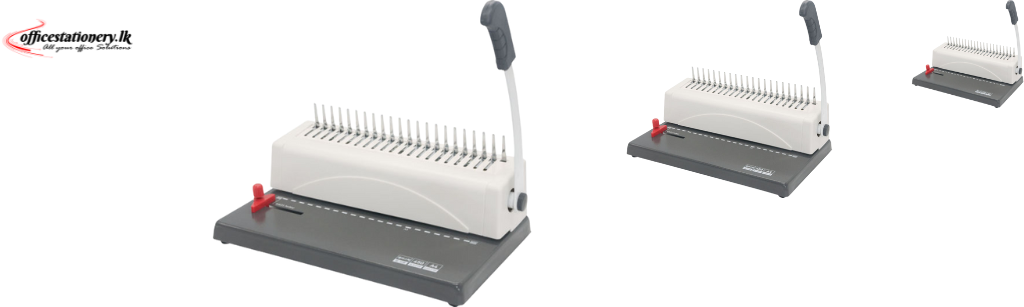
How to choose a comb binding machine for your office
A comb binding machine punches a row of rectangular holes along the edge of a stack of paper, then threads a plastic comb through them so the pages lie flat and can be added or removed at any time. For most offices the right choice comes down to four things: your binding volume, the document thickness you need to handle, punch capacity, and build quality. This guide walks through each, with the real specifications and numbers you need to compare models confidently.
Document presentation is not a shrinking niche. According to Mordor Intelligence, the global binding machines market is valued at about USD 1.39 billion in 2025 and is projected to reach USD 1.97 billion by 2030, growing at a 7.22% CAGR — a sign that bound, professional documents remain in steady demand even as offices digitise.
“The binding machines market is expected to grow from USD 1.39 billion in 2025 to USD 1.97 billion by 2030, at a CAGR of 7.22%.” — Mordor Intelligence, Binding Machines Market Report
How comb binding works
A comb binding machine has three working parts:
- Punching mechanism — creates the evenly spaced rectangular holes. For A4 paper the standard is 21 holes, spaced at a 14.3 mm pitch, with each hole roughly 3 × 8 mm.
- Comb opener — fans open the plastic comb’s tines so the punched stack can be loaded.
- Document guide / margin selector — aligns the paper and sets the margin depth, typically selectable at 2.5 mm, 4.5 mm or 6.5 mm.
The big advantage over wire or thermal binding: a comb can be reopened, so you can swap or add pages to a bound document at any time — ideal for manuals, training packs and price lists that change.
The numbers that actually matter when comparing machines
Don’t choose on looks or price alone. Compare these published specifications, which are consistent across mainstream manufacturer datasheets (example spec sheet):
- Binding capacity (comb size): plastic combs run from 3/8″ (≈6 mm) up to 2″ (≈51 mm). A 2″ comb binds up to about 450 sheets of 70–80 gsm paper; a 6 mm comb suits ~20–25 sheets.
- Punch capacity per pass: entry machines punch 10–12 sheets at a time; heavier models handle up to 20 sheets. This is the single biggest factor in how fast a large job goes.
- Manual vs electric punch: manual machines suit low-to-medium volume; electric punching pays off above roughly a few hundred sheets a week by reducing operator fatigue.
Match the machine to your office volume
Low volume (occasional binding)
A manual comb binding machine with a 10–12 sheet punch is enough for occasional reports and proposals. The S308 comb binding machine available at Officestationery.lk is a typical fit here, punching up to 15 sheets and binding up to 250 sheets.
Medium to high volume (daily binding)
If you bind every day, look for a sturdier build, a 15–20 sheet punch and, ideally, electric punching. The higher punch capacity and metal construction are what keep a machine reliable under daily load.
Cost considerations and budgeting in Sri Lanka
Comb binding machines span a wide price range, from affordable manual units for small offices to heavy-duty electric models. Beyond the machine, budget for consumables — plastic combs and, if needed, covers — since these are the recurring cost. Buying the machine and combs from one supplier keeps sizing consistent (a 21-ring A4 comb fits any standard A4 machine).
Frequently asked questions
-
How many sheets can a comb binding machine hold?
It depends on the comb size, not the machine. Comb spines range from 3/8 inch (about 6 mm), which holds roughly 20-25 sheets, up to 2 inch (about 51 mm), which holds up to roughly 450 sheets of 70-80 gsm paper.
-
How many holes does an A4 comb binding machine punch?
A4 comb binding uses a 21-hole pattern at a 14.3 mm pitch. US letter-size machines use 19 holes, so check the format before buying combs.
-
Is comb binding better than spiral or wire binding?
Comb binding’s main advantage is that the comb reopens, so you can add or remove pages later, while wire and coil binding are permanent. For documents that change such as manuals and price lists, comb binding is the more flexible choice.
-
Can I reuse plastic binding combs?
Yes. Because the comb opener simply fans the tines open, you can unbind a document and reuse the comb, which lowers the running cost compared with permanent binding methods.
Final word
Choose your comb binding machine on the specifications that drive real-world performance — punch capacity per pass, supported comb size (and therefore sheet capacity), and build quality — rather than on the headline price. Match those to your actual binding volume and the machine will pay for itself in professional, reusable documents for years.
 Fast dispatch via Prompt XPress
 Fast dispatch via PickMe
 Fast dispatch via Koombiyo Delivery
 Pay with KOKO — Buy now, pay later
 Monthly installments on orders over Rs. 10,000
 Island-wide delivery